

Introduction
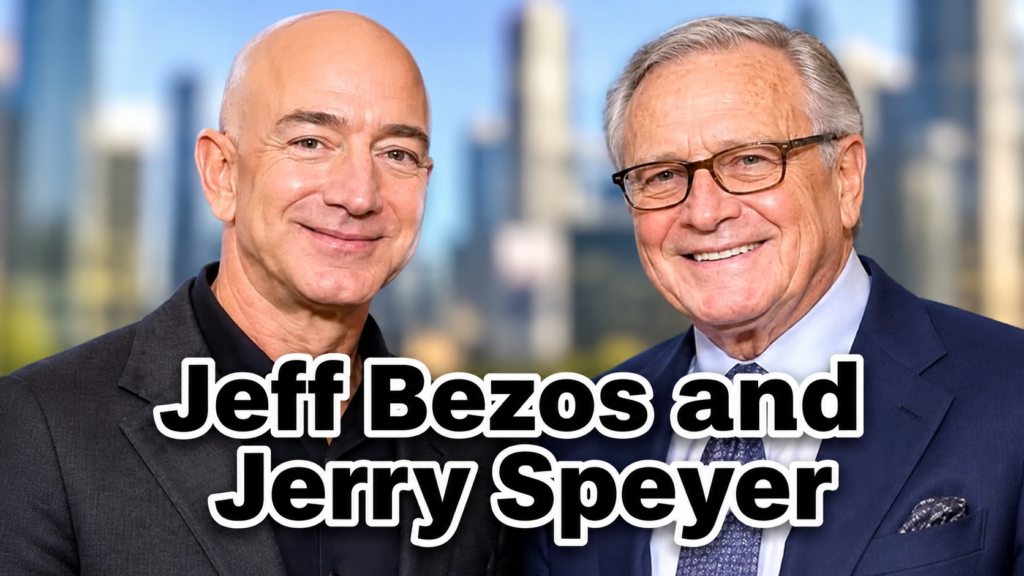
Jeff Bezos and Jerry Speyer are two influential billionaires whose careers have shaped very different industries. Bezos transformed online shopping and technology through Amazon, while Speyer became one of the most recognized figures in commercial real estate through Tishman Speyer. Although their professional backgrounds are different, their interests have brought them into overlapping business and philanthropic circles in New York City.
The story of Jeff Bezos and Jerry Speyer highlights how modern technology wealth and traditional property development can intersect. One built an international business empire through innovation and digital commerce, while the other helped shape Manhattan’s skyline through major real estate projects. Their connection reflects the influence of powerful business leaders in one of the world’s most important financial cities.
Who Is Jeff Bezos?
Jeffrey Preston Bezos was born on January 12, 1964, in Albuquerque, New Mexico. His early life was not surrounded by the enormous wealth he would eventually accumulate. His mother was a teenager when he was born, and his stepfather, Miguel Bezos, was a Cuban immigrant who moved to the United States at the age of 15.
Bezos demonstrated strong academic abilities during his school years. He graduated as valedictorian from high school in Miami before attending Princeton University. There, he studied electrical engineering and computer science, earning degrees that helped prepare him for a career in technology.
Before establishing Amazon, Bezos worked on Wall Street, including at the investment firm D.E. Shaw. Despite having a promising financial career, he decided to pursue an ambitious business idea.
In 1994, Bezos left his job and moved to Seattle. He started an online bookstore from his garage, creating the foundation for what eventually became Amazon. The company expanded beyond books into e-commerce, cloud computing, and digital advertising.
His business success made him one of the world’s wealthiest individuals, with the supplied article estimating his fortune at approximately $200 billion.
Bezos later stepped away from Amazon’s everyday leadership to concentrate on other interests, including Blue Origin, his space exploration company, and philanthropic activities. His property investments in Manhattan also brought him closer to New York’s established real estate community.
Who Is Jerry Speyer?
Jerry I. Speyer was born on February 24, 1940, in New York City. Unlike Bezos, whose fortune came primarily from technology and online commerce, Speyer developed his career in the real estate industry.
Growing up in a family connected to New York’s construction and development business gave him early exposure to the property market. This background helped him understand the importance of location, investment, and long-term development.
Speyer attended Columbia University, where he earned both undergraduate and law degrees. His education provided a foundation for his future business activities.
In 1978, he partnered with Robert Tishman to establish Tishman Speyer. The company gradually became a major international real estate organization, developing and managing important commercial properties.
Its well-known properties include Rockefeller Center, the Chrysler Building, and the MetLife Building. These developments have contributed significantly to the company’s reputation and Speyer’s influence in Manhattan.
According to the supplied article, Jerry Speyer’s estimated net worth is between $4 billion and $5 billion. His wealth primarily comes from his involvement in commercial real estate.
Tishman Speyer operates across four continents and manages more than 150 million square feet of property. His career demonstrates how long-term investment and property development can create substantial financial influence.
How Jeff Bezos and Jerry Speyer Became Connected
The connection between Jeff Bezos and Jerry Speyer is primarily associated with New York City’s real estate environment and overlapping philanthropic interests.
Around 2019, Bezos began making significant investments in luxury Manhattan properties. His purchases included an approximately $80 million property compound on the Upper East Side, several units at 212 Fifth Avenue, and other expensive residential properties.
These investments placed Bezos within the same real estate environment where Speyer had developed considerable influence over several decades.
Although their professional backgrounds are different, both individuals have interests connected to New York’s business and cultural communities.
Their names have also been associated with overlapping philanthropic circles. Both have supported major cultural organizations, educational causes, museums, and other charitable activities in New York.
However, it is important to understand that the supplied article does not establish a formal business partnership between them. Their connection is described as a combination of shared professional environments, property interests, and philanthropic circles.
The story of Jeff Bezos and Jerry Speyer is therefore less about building a company together and more about how influential individuals from different industries can become part of the same business community.
Jeff Bezos and Jerry Speyer: Biography Comparison
| Details | Jeff Bezos | Jerry Speyer |
|---|---|---|
| Full name | Jeffrey Preston Bezos | Jerry I. Speyer |
| Date of birth | January 12, 1964 | February 24, 1940 |
| Age in 2025 | 61 | 85 |
| Birthplace | Albuquerque, New Mexico | New York City |
| Education | Princeton University | Columbia University |
| Estimated net worth | Approximately $200 billion | $4–5 billion |
| Industry | Technology and e-commerce | Commercial real estate |
| Major company | Amazon | Tishman Speyer |
| Other interests | Blue Origin | Property development |
| Partner | Lauren Sánchez (fiancée) | Katherine Farley |
| Children | Four | Three |
| Philanthropy | Bezos Earth Fund, Day One Fund | MoMA, Columbia University |
Different Industries, Similar Influence
One reason the story of Jeff Bezos and Jerry Speyer attracts attention is the contrast between their professional achievements.
Bezos represents the modern technology economy. His success came from recognizing opportunities in online commerce and expanding a business into multiple international markets. Amazon’s development demonstrates how technology can change consumer behavior and create entirely new business opportunities.
Speyer represents the established real estate industry. His achievements are connected to developing, managing, and investing in important buildings and commercial properties. His work has influenced the physical appearance and economic activity of Manhattan.
Despite these differences, both understand the importance of long-term investment and strategic decision-making.
Jeff Bezos and Jerry Speyer also demonstrate how wealth from different industries can influence the same city. Technology entrepreneurs increasingly invest in traditional assets, while established property developers continue adapting to changing economic conditions.
Their overlapping interests offer an interesting example of how business influence extends beyond individual industries.
Philanthropy and Their New York Connections
Charitable activities provide another area where the professional worlds of these billionaires overlap.
Bezos has supported educational, environmental, and social initiatives through organizations such as the Bezos Earth Fund and Day One Fund. His philanthropic interests extend beyond his technology businesses.
Speyer has also maintained connections with cultural and educational institutions. His involvement with organizations such as the Museum of Modern Art and Columbia University reflects his interest in supporting New York’s cultural and academic communities.
These activities help explain why Jeff Bezos and Jerry Speyer are discussed within similar circles. Their interests extend beyond financial investments and include institutions that contribute to the city’s development.
Why Their Connection Matters
The story of Jeff Bezos and Jerry Speyer represents a wider relationship between modern technology wealth and traditional real estate power.
Bezos created his fortune through digital innovation, global commerce, and technology infrastructure. Speyer built his reputation through commercial properties, development projects, and long-term investment strategies.
Their connection illustrates how influential business figures can share economic and social environments without having a direct corporate partnership.
New York City provides a natural meeting point for these different worlds. It is an international center for finance, property investment, technology, culture, and philanthropy.
Ultimately, Jeff Bezos and Jerry Speyer represent two different approaches to building wealth and influence. Their overlapping interests demonstrate how traditional industries and modern businesses can exist within the same economic landscape.
Key Facts About Jeff Bezos and Jerry Speyer
Several important points help explain their different careers and shared New York connections:
-
Jeff Bezos established Amazon and became a leading figure in global technology and e-commerce.
-
Jerry Speyer co-founded Tishman Speyer and became an influential commercial property developer.
-
Bezos invested heavily in luxury Manhattan properties beginning around 2019.
-
Speyer’s business career has been closely connected to some of New York’s most recognizable buildings.
-
Both have participated in philanthropic activities involving education and cultural institutions.
-
Their connection is described as social and professional rather than a formal business partnership.
Frequently Asked Questions (FAQs)
1. Who are Jeff Bezos and Jerry Speyer?
Jeff Bezos is the founder of Amazon and an influential technology entrepreneur. Jerry Speyer is a prominent real estate businessman and co-founder of Tishman Speyer. Both have significant connections to New York City.
2. What connects Jeff Bezos and Jerry Speyer?
Their connection comes from overlapping interests in Manhattan real estate, business communities, and philanthropic activities. However, no formal business partnership is established in the supplied account.
3. What is Jeff Bezos’s estimated net worth?
According to the supplied article, Jeff Bezos has an estimated net worth of approximately $200 billion. His fortune primarily comes from Amazon and other investments.
4. How wealthy is Jerry Speyer?
Jerry Speyer’s estimated net worth is approximately $4 billion to $5 billion. His wealth is mainly associated with commercial real estate and Tishman Speyer.
5. What company did Jerry Speyer establish?
Jerry Speyer partnered with Robert Tishman in 1978 to establish Tishman Speyer, an international real estate company.
6. Did Jeff Bezos and Jerry Speyer work together?
The supplied article does not identify a formal business partnership between them. Their connection is based on overlapping professional interests and New York’s philanthropic and business circles.
7. How many children does Jeff Bezos have?
Jeff Bezos has four children. Three sons are from his marriage to MacKenzie Scott, and he has one daughter with Lauren Sánchez.
8. Why is New York important to their stories?
New York is important because it represents a major center for real estate investment, finance, technology, and philanthropy. Bezos has invested in luxury properties there, while Speyer has spent decades developing and managing important buildings.
Conclusion
The story of Jeff Bezos and Jerry Speyer demonstrates how two individuals can achieve extraordinary success through completely different industries. Bezos transformed online commerce and technology, while Speyer established a lasting reputation through commercial property development.
Although they did not build their businesses together, their interests have brought them into overlapping circles in New York City. Their respective achievements demonstrate the influence of innovation, investment, and long-term business planning.
Ultimately, Jeff Bezos and Jerry Speyer represent two different sides of modern economic power. Their stories show how technology and traditional real estate can intersect in a city where business, culture, and investment are closely connected.